



Quick Summary
Start with the timber you move most, then match the grapple type, jaw opening and width to that work. Log grapples suit single stems and long timber, bunching grapples suit brush and small pieces, and general-purpose models cover mixed jobs. Check mounting, hydraulics and lift capacity before buying, so the how to choose the right grapple for timber handling decision is sound.
- Measure the largest diameter you regularly lift before ordering any grapple.
- Use a log grapple for single stems and long timber; a bunching grapple for brush and small logs.
- Confirm mounting, hydraulic flow and pressure match your excavator before purchase.
- Keep the grapple and timber weight within the carrier's rated capacity at your working reach.
- Inspect tines, pins and hoses before each shift, and remove worn grapples from service.
Table of Contents
- Start With the Timber You Need to Move
- Forestry Grapple Types and Where Each One Fits
- Matching Grapple Width and Spread to Timber Size
- Checking Excavator Grapple Compatibility
- Grapple Capacity for Excavators and Load Control
- A Step-by-Step Selection Checklist Before You Buy
- Choosing Your Timber Grapple Next Steps
- Frequently Asked Questions
Start With the Timber You Need to Move
Learning how to choose the right grapple for timber handling starts with the wood, not the machine. Most grapples fail because they were picked for the carrier first and the job second. The most reliable approach is to work backwards: list the timber sizes, lengths and loads you handle most, then match the grapple to that work.
Ask yourself three questions before you look at any product:
- What size are the logs? Full-length stems, cut logs and small branches each need a different jaw and tine design.
- How often do you pick up whole trees? Daily heavy handling demands a stronger build than occasional clean-up.
- What else will this grapple move? If it also handles roots, rock or debris, a general-purpose model may suit you better than a dedicated timber unit.
Watch out: A grapple that is too small for the timber will drop loads and strain the tines. Measure the largest diameter you regularly lift before you order.
Forestry Grapple Types and Where Each One Fits
Forestry grapples come in a few main designs. Each suits a different kind of timber work, and the wrong choice costs time on site.
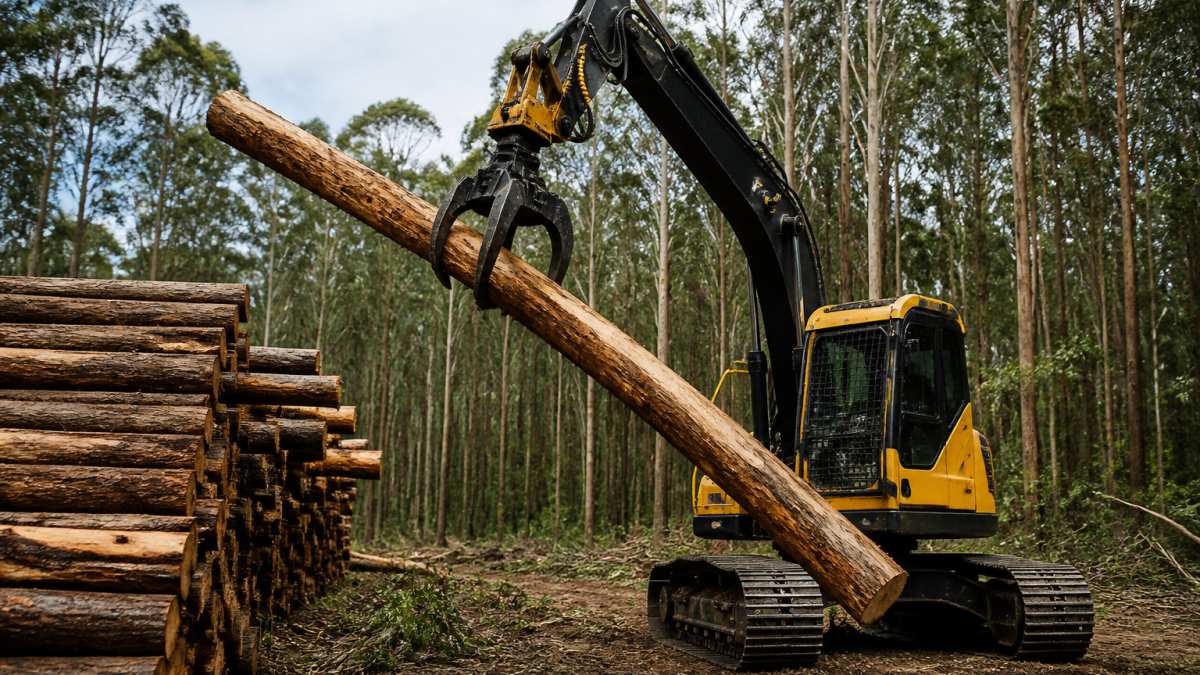
Log grapples versus bunching grapples
A log grapple concentrates its clamping force on timber. Its jaws and tines are built to hold round stems firmly during loading and skidding. A bunching grapple has a wider, more open design, so it gathers several smaller pieces at once. Use a log grapple for single stems and long timber. Use a bunching grapple for brush, small logs and loose material.
If you want a ready-made option for skidding logs, the Log Skidding Grapple for Skid Steer Loaders is built for log handling and is a practical starting point for anyone working out how to choose the right grapple for timber handling.

Root and general-purpose grapples
A root grapple handles a wider range of material, including roots, rock and mixed debris. It is a sensible choice for contractors who switch between clearing and timber work. The trade-off is that it does not focus clamping force on round timber the way a dedicated log grapple does. Match the grapple to the material and the task, not just the carrier.
Matching Grapple Width and Spread to Timber Size
Grapple width and jaw spread decide whether a load sits securely. A jaw that opens too narrow will not close around a thick stem. A jaw that opens too wide will let logs roll out.
Check these measurements against your timber:
- The jaw opening should clear the largest log diameter you lift, with room to spare.
- The closed grip should contact the timber at enough points to hold it steady.
- The overall width should suit the carrier so you keep clear visibility and control.
A slightly wider jaw can suit mixed loads, because it handles both thick and thin material without constant swapping.
Checking Excavator Grapple Compatibility
Compatibility matters as much as the grapple design. A grapple that does not fit your excavator's mounting or hydraulic system will sit unused.
Work through this check before you buy:
- Confirm the mounting interface, such as a quick hitch or pin layout, matches your machine. You can browse the excavator grapple bucket range to compare mounting options.
- Check that your hydraulic flow and pressure meet the grapple's requirements.
- Confirm you have a third-function or rotator circuit if the grapple needs one.
- Compare the grapple's weight with your machine's rated lift capacity.
If you are unsure, ask for help verifying fitment before you commit.
Watch out: Fitting a grapple to a carrier without checking hydraulic flow can cause slow, weak operation or damage to the hydraulic system.
Grapple Capacity for Excavators and Load Control
Capacity is not a single number. It is the interaction between the grapple's weight, the timber's weight, the carrier's rated capacity at a given reach, and the stability of the ground you are working on.
The two-part weight calculation
Your excavator's lift capacity must cover the grapple plus the timber plus any rotator or quick hitch. That total must stay within the machine's rated capacity at the working reach, not at the pin, and not at minimum radius. Lifting at full extension can cut usable capacity considerably compared with close-range figures. A grapple that is safe at two metres may be unstable at four.
Work through it in this order:
- Find the carrier's rated lift capacity at your typical working reach (consult the operator's manual or load chart).
- Subtract the grapple's weight, the rotator weight, and the quick hitch weight.
- The remainder is your maximum timber load at that reach.
- Compare that figure with the actual weight of the timber you lift most often.
If the margin is thin, reduce the reach, use a lighter grapple, or handle smaller loads. Do not rely on the machine's maximum lift figure, which usually applies at ground level and close in.
Log Skidding Grapple for Skid Steer Loaders →
Stability and suspended-load risks
Timber is a suspended load, and suspended loads behave differently from bucket work. A log can swing, rotate, or slip if the jaws do not clamp evenly. Keep loads low and close to the machine, especially on sloping or soft ground. Avoid slewing quickly with a long stem, because the load's momentum can tip a machine that feels stable when stationary.
Pinch points and jaw control
Grapple jaws create pinch points at the tines and at the closing gap. Keep hands clear when guiding logs, and use tag lines rather than manual positioning where possible. A rotator helps you place logs without dragging them, which reduces the chance of the load catching and swinging back.
Safe working load and inspection
Check the grapple's rated capacity and inspect tines, pins, and hydraulic hoses before each shift. Worn tines reduce grip and can let a log roll out mid-lift. If a tine is bent or a pin is loose, take the grapple out of service until it is repaired. Schedule regular inspections and record any wear so you can plan replacements before they fail on site.
A Step-by-Step Selection Checklist Before You Buy
This checklist turns the earlier sections into a measurable workflow. Work through it in order, and record the figures so you can compare grapples on paper before you commit.
Step 1: Measure your timber
Record the largest diameter you lift regularly, the longest stem you handle, and the typical load weight. If you move mixed sizes, note the range. These figures drive every later decision.
Step 2: Choose the grapple type for your main job
Match the type to the work you do most, not the occasional job:
- Log grapple: single stems, long timber, loading and skidding.
- Bunching grapple: multiple small stems, brush, loose material.
- Sorting grapple: mixed loads where you need to pick and place individual pieces.
- General-purpose or root grapple: mixed clearing and timber work where timber is not the main task.
If you switch between jobs often, a general-purpose model may be more practical than swapping dedicated units.
Step 3: Confirm jaw opening and width
The jaw opening must clear your largest log diameter with room to spare. The closed grip should contact the timber at enough points to hold it steady. Overall width should suit the carrier so you keep visibility and control.
Step 4: Verify carrier compatibility
Check the mounting interface, hydraulic flow and pressure, and whether you need a third-function or rotator circuit. Compare the grapple's weight with your machine's rated lift capacity at your working reach.
Step 5: Compare total cost of ownership
Purchase price is only part of the cost. Ask about wear parts (tines, pins, bushes), serviceability, and expected maintenance intervals. A cheaper grapple that wears quickly can cost more over its life than a heavier-built unit that needs fewer replacements.
Step 6: Plan maintenance and inspection
Budget for greasing, pin checks, and tine replacement. Schedule weekly and monthly inspections, and keep records so you can spot wear trends before they cause downtime.
Step 7: Match the grapple to real job examples
Use these examples to test your choice:
- Long stems and roadside loading: a log grapple with a wide enough jaw and a rotator for placement.
- Short logs and sorting: a sorting grapple that lets you pick individual pieces without disturbing the pile.
- Mixed slash and clearing: a bunching or general-purpose grapple that gathers loose material.
If your main job fits one of these patterns, choose the grapple that matches it and verify the capacity and compatibility checks above. Following these steps reduces the risk of buying a grapple that suits the catalogue but not your job.
Choosing Your Timber Grapple Next Steps
Start with the timber, then match the grapple type, width and carrier to that work. A log grapple suits dedicated timber handling, while a general-purpose model covers mixed jobs. Verify fitment and capacity before buying, and ask for help if your machine or load is unusual.
Our team at Earthmoving Warehouse can talk through your timber sizes and carrier, then point you to the right grapple. Contact us with your machine details and the timber you move most, and we will help you find a grapple that fits the job and your budget.
Frequently Asked Questions
What type of grapple is best for handling timber?
A dedicated log grapple is generally the better choice for timber, because it concentrates clamping force on stems rather than spreading across mixed material. Log grapples suit full-length logs and long timber, while bunching grapples help gather smaller stems. A general root grapple can handle mixed debris but offers less stability on heavy logs. Match the grapple to the timber diameter and length you handle most often, and confirm the jaw opening will close firmly around your typical load.
How do I match a grapple to my excavator?
Start with the carrier's operating weight and lift capacity, then check the mounting interface and hydraulic requirements. The grapple must fit your quick hitch or pin layout, and its operating weight should leave enough margin in the machine's rated lift capacity. Confirm the hydraulic flow and pressure match the grapple's rotator and jaw functions, and check whether a third-function or auxiliary valve is needed. Measuring your pin diameter and centres before purchase avoids costly modifications.
What is the difference between a log grapple and a root grapple?
A log grapple is designed for timber, with jaws and clamping force suited to holding logs securely during lifting and stacking. A root grapple has a wider, more open tine arrangement that handles roots, branches, rock and mixed debris. Log grapples typically give better grip on round stems, while root grapples cover a wider range of materials. If most of your work is timber, a log grapple is usually the more practical choice.
What should I check before buying a used timber grapple?
Inspect the tines and jaws for cracks, bending and excessive wear at the pivot points. Check the pins, bushings and hinge areas for play, and look for any welded repairs on load-bearing sections. Test the rotation and jaw cylinders for leaks and smooth operation, and confirm the hydraulic hoses and fittings are in good condition. Ask for the grapple's rated capacity and confirm it suits your carrier before committing to the purchase.


