



Last Updated: November 16, 2026
Quick Summary
A hydraulic grab lets an excavator close five serrated fingers around irregular debris, so operators can lift and sort material in one cycle instead of pushing and re-gripping with a bucket. Matching the grab to the machine's weight class and checking hydraulic flow are the steps that make the gain real.
- Five serrated fingers hold irregular debris like concrete, timber and scrap steel.
- Match the grab to the excavator's weight class to avoid slowing the carrier.
- Check auxiliary hydraulic flow and pressure against the grab's specification.
- Factor the attachment's own weight into every lift plan at full reach.
- Place sorting skips within a 90-degree arc to cut slewing time.
Table of Contents
- Why a Hydraulic Grab Changes the Pace of Demolition Work
- Choosing the Right Grab for Your Demolition Work
- Checking Excavator Attachment Compatibility Before You Fit
- Using a Rotating Hydraulic Grab to Position and Sort Debris
- A Step-by-Step Workflow for Demolition Material Handling
- Hydraulic Grab Maintenance and Troubleshooting on Site
- Booking Your Grab Fitment Check With Earthmoving Warehouse
- Frequently Asked Questions
Why a Hydraulic Grab Changes the Pace of Demolition Work
A hydraulic grab turns an ordinary excavator into a faster, more precise demolition tool. Instead of pushing and scraping material with a bucket, the operator closes five serrated fingers around debris and lifts it cleanly. At Earthmoving Warehouse, we see the same question come up from site managers and contractors: how much does a grab actually speed up the work?
A grab holds irregular loads like broken concrete, timber and scrap steel in place, so the operator can move them without repeated drops.
- Holds irregular debris better than a standard bucket
- Reduces re-gripping and dropped loads
- Lets operators sort material as they work
- Keeps workers further from the load during lifts
Choosing the Right Grab for Your Demolition Work
The right grab depends on the weight class of your excavator and the kind of material you handle most. A grab that is too heavy for the machine will slow the carrier and wear the hydraulics faster. A grab that is too light may not close firmly on dense concrete.
Our EarthQuake Hydraulic Rock Grab suits 1.5T to 2T excavators and works well for rock walls, land clearing, sorting recyclables and loading skips. Its full specifications are set out on the product page for easy comparison. It uses a serrated 5-finger design for a firm hold on uneven loads, and it is listed at $2,095.00 (AUD).
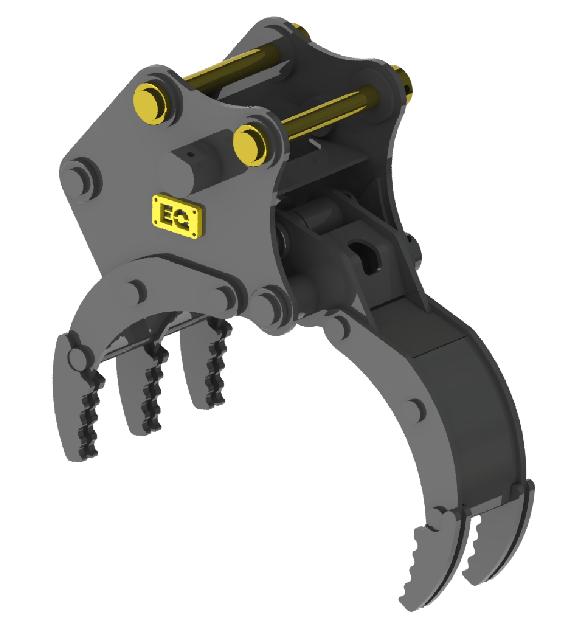
For heavier machines, the Roo Attachments Mechanical Grab 10T to 14T is a solid finger grab made from Bisalloy steel. It has a 2000mm opening, weighs 670 kg and carries a 2-year warranty, with a listed price of $6,075.00 (AUD).
When comparing options, check:
- Machine weight class: match the grab to the carrier's rated range
- Main material: rock, timber, concrete or mixed waste each favour a different jaw
- Opening width: make sure it clears the largest pieces you expect
- Hitch type: confirm the pin layout before ordering
Best for: contractors running one mini excavator on mixed demolition and landscaping jobs.
Checking Excavator Attachment Compatibility Before You Fit
Most fitment problems come from skipping a few simple checks. Measure your machine's hitch before you buy, not after the grab arrives. The key figures are pin diameter, pin centres and ear or boss width.
Hitch geometry is only one part of compatibility. Work through the following before committing to an attachment.
Hydraulic flow and pressure. Confirm the machine's auxiliary circuit delivers the flow and pressure the grab's cylinders are rated for. Too little flow produces slow, weak closing and poor grip; too much pressure can stress seals and cylinder rods. Check the attachment specification against the carrier's published auxiliary hydraulic figures, and allow for flow loss through hoses and couplers.
Lifting capacity at the working radius. A grab and its load create a combined moment that the excavator must handle at full reach. Check the carrier's load chart at the radius where you will actually be lifting, not just at the pin.
Attachment weight versus rated capacity. The grab's own mass counts against the machine's lifting allowance. A 670 kg finger grab on a 10 to 14 tonne carrier leaves less capacity for the load than the bare machine rating suggests. Factor the attachment weight into every lift plan.
Coupler and pin configuration. Confirm whether the machine runs a quick coupler or direct pin-on hitch, and match the grab's pin layout, pin diameter and ear width to it. A coupler adds its own weight and offset, which changes the working geometry and must be included in the load chart calculation.
Auxiliary circuit layout. Check hose sizes, coupler types and the number of auxiliary circuits available. A rotating grab may need a second circuit or a diverter, and a thumb or grab that shares a circuit with another function can limit simultaneous operation.
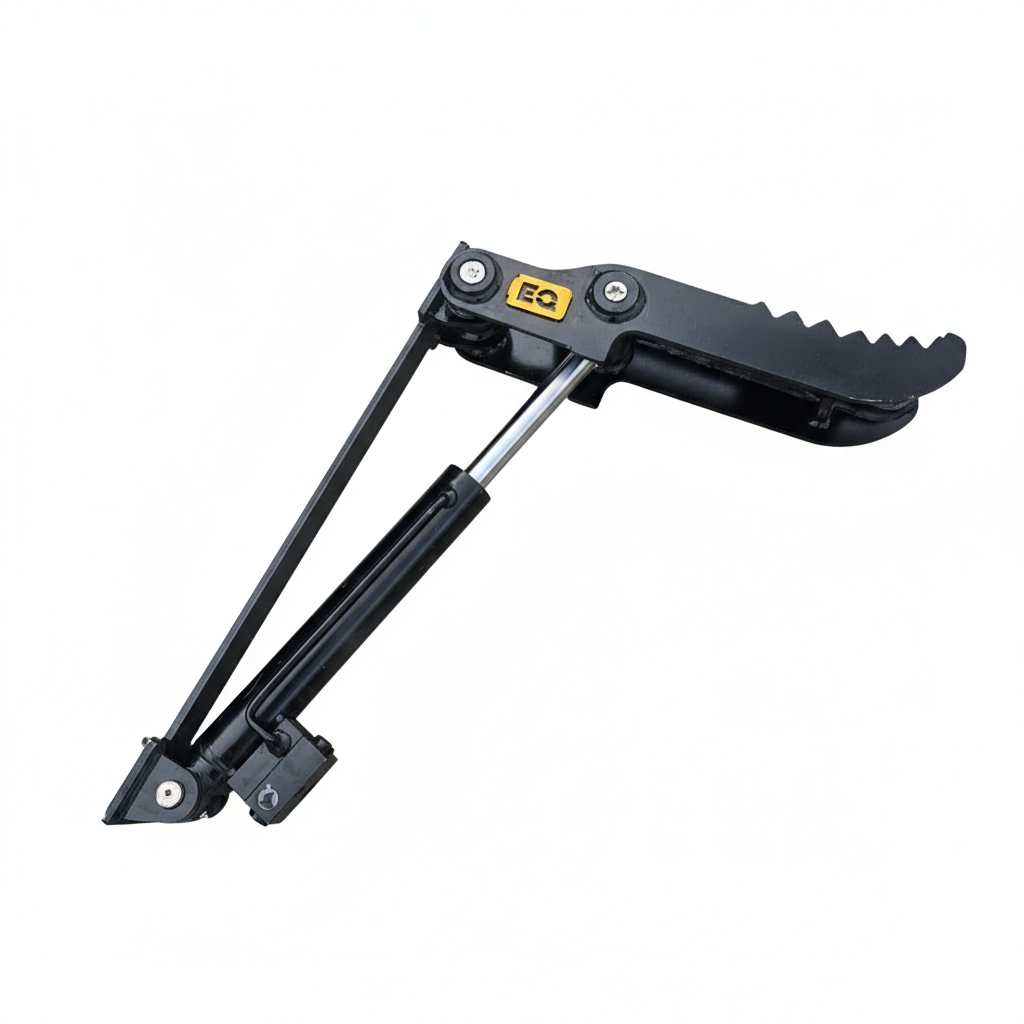
Our EQ-1.7T Hydraulic Thumb is designed as a weld-on attachment for 1.5 to 2 tonne excavators and includes hydraulic hoses. The product page lists the mounting details to check against your machine. Fitting may need extra fittings depending on your auxiliary layout, so confirm these before you order.
Before you fit anything, work through this checklist:
- Confirm the machine make, model, year and hitch type
- Measure pin diameter, pin centres and ear width
- Check the weight class against the attachment's rating
- Compare auxiliary flow and pressure to the grab's specification
- Check the load chart at the working radius with the attachment weight included
- Confirm hose sizes, coupler types and auxiliary circuit layout
- Ask our team to verify fitment before you buy
Watch out: a grab that pins up but runs on the wrong flow will feel sluggish and may tempt an operator to force it, which accelerates seal and cylinder wear.
Using a Rotating Hydraulic Grab to Position and Sort Debris
A rotating attachment adds a second layer of control. The EarthQuake Rotating Multi-Processor rotates through 360 degrees and has integrated shears for cutting through reinforcing steel.
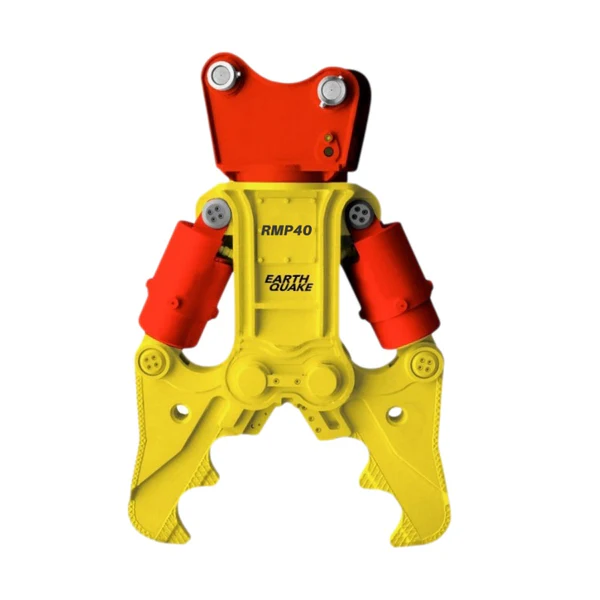
The unit is listed at $54,200.00 (AUD) and is made to order, so plan lead times into the project schedule.
Watch out: rotating the load without checking clearance can swing it into people or other machines. Clear the arc before every rotation.
A Step-by-Step Workflow for Demolition Material Handling
A good workflow saves more time than a better grab does. Here is the sequence we recommend on most demolition jobs, with the practical detail that turns each step into measurable productivity.
-
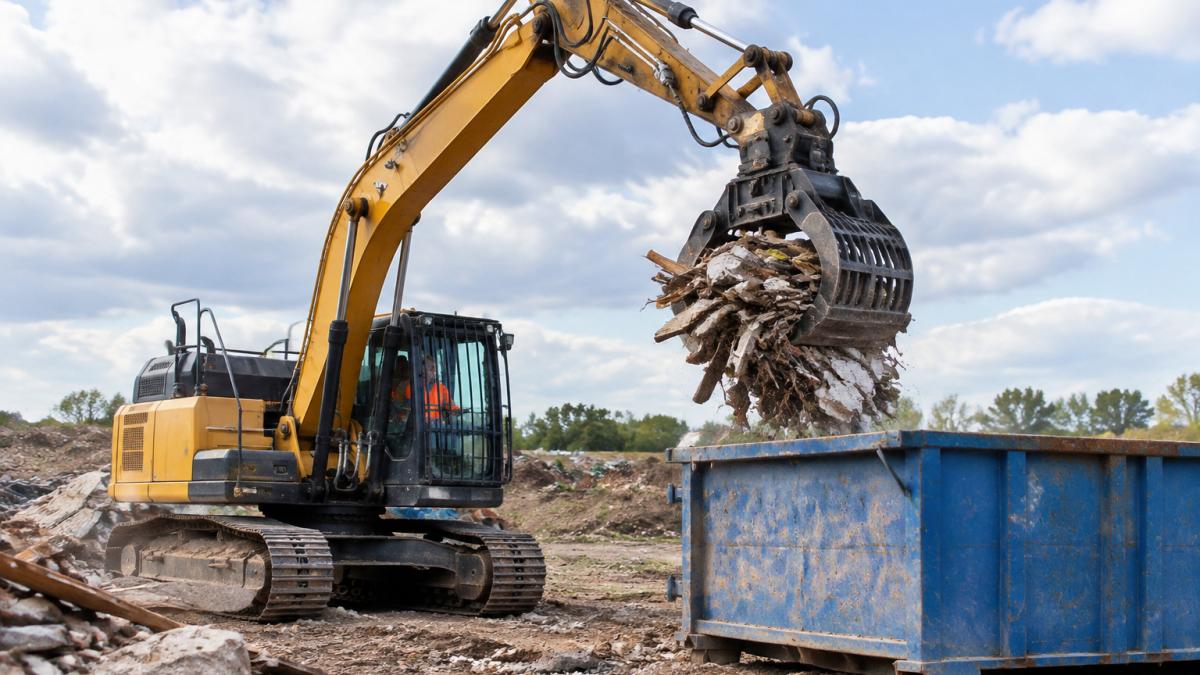
Survey the site and set the sorting zones. Mark material zones and skip positions before the machine starts. Place skips so the grab can reach each one with the shortest safe slew, ideally within a 90-degree arc from the demolition face. A common pattern is to group concrete, steel, timber and general waste skips in a line parallel to the work face so the operator sorts with a single slew rather than tracking back and forth.
-
Fit and test the grab. Check the hitch, hoses and locking pins, then run a few empty cycles. Confirm the grab closes fully and holds pressure before loading. Test the rotation arc with no load to confirm clearance.
-
Break down large sections. Use the rotating processor or a breaker to reduce pieces to a size the grab can lift and the skip can accept. Oversized pieces force re-gripping and double-handling, which is where most cycle time is lost.
-
Grab and sort in one motion. Lift each piece and drop it into the right stream: concrete, steel, timber or general waste. The efficiency gain comes from combining the lift and the sort into a single cycle rather than stockpiling and sorting later.
-
Load the skips evenly. Keep the load level so the skip is not overloaded on one side. An uneven skip is harder to transport and may be rejected at the transfer station.
-
Clear and reset. Remove fallen debris from the work area before the next cycle. Debris under the tracks slows tracking and increases wear.
Measuring whether the workflow is actually working. Efficiency claims are only useful if they can be checked. Track a few simple figures across a shift or a week:
- Cycle time: time from grab closing on a piece to releasing it in the correct skip. A short, consistent cycle indicates good positioning and sorting-zone layout.
- Double-handled tonnage: estimate how much material is moved more than once. This is the clearest sign that sorting zones or piece sizing need adjustment.
- Machine hours per tonne processed: divide operating hours by tonnes moved to get a productivity figure you can compare across shifts or sites.
- Skip swaps and transport movements: fewer swaps per tonne usually mean better sorting discipline.
- Recovered-material value: record the tonnage sent to recycling or resale versus general waste. Even without exact prices, the ratio of recovered to disposed material shows whether the grab is being used as a sorting tool or just a lifting tool.
Operating technique that protects the cycle time. Position the machine so the grab can reach the demolition face and the sorting skips without tracking between each lift. Keep the load close to the machine when slewing, and avoid rotating a loaded grab through more than the necessary arc. Travel distance between the face and the skips is one of the largest hidden time costs on a demolition site, and it is usually fixed by layout rather than by operator skill.
Watch out: sorting zones that are too far apart or poorly aligned with the work face force the operator to track between lifts, which erases the cycle-time gain the grab was meant to deliver.
Hydraulic Grab Maintenance and Troubleshooting on Site
Check the pivot points regularly and grease them before work starts. The EarthQuake Hydraulic Rock Grab has greaseable pivot points and a cylinder check valve that holds the ram in place once a load is gripped.
Look for rounded edges, cracks around the welds and loose bolts, and replace worn teeth before they start losing grip. Our bucket teeth replacement frequency guide explains how to judge wear on the jaws and teeth.
If the grab closes slowly or drifts open under load, check the hoses for leaks and the cylinder seals for oil loss. Low hydraulic flow can also cause sluggish movement, so confirm the machine's auxiliary flow matches the attachment's specification.
For parts and servicing questions, our team can help you check fitment and wear items before a breakdown holds up the job.
Booking Your Grab Fitment Check With Earthmoving Warehouse
Before you order a grab, a quick fitment check can save hours of grinding and modification. Our expert team can help you confirm fitment for your machine.
Earthmoving Warehouse has operated since 2019 and is Queensland's only Kato construction equipment dealer. We stock attachments for excavators and skid steers, with pickup locations across SE QLD, NSW and Victoria.
If you are choosing between grab options for your next demolition job, get a fitment check first and request pricing for the models that match your machine.
Quick Summary: Match the grab to your excavator's weight class, check the hitch before you buy, and sort material as you lift it. A clear step-by-step workflow and regular maintenance do more for productivity than the attachment alone.
Frequently Asked Questions
How does a hydraulic grab improve demolition efficiency?
A hydraulic grab lets the excavator pick up, hold and release irregular debris such as broken concrete, timber and steel in one controlled movement, rather than pushing material around with a bucket. The serrated fingers grip uneven loads. Matching the grab to the machine class is important for day-to-day use.
How do you check excavator attachment compatibility before fitting a hydraulic grab?
Start with the machine's operating weight class, then confirm the hitch type, pin diameter, pin centres and ear or boss width against the grab's specifications. Many machines use half hitches or pull pin hitches, so measure the pins on your own machine rather than relying on the model name alone, as some models are built by different manufacturers. Check hydraulic flow and the auxiliary circuit so the grab cylinder operates correctly. Our team can help verify fitment before you order.
Are rotating hydraulic grabs useful for demolition?
A rotating hydraulic grab lets the operator turn the load through 360 degrees, which helps when debris needs to be positioned or sorted without repositioning the whole machine. Rotation adds weight and hydraulic demand, so it suits machines in the right class and operators who will use the rotation regularly.
How do you maintain a hydraulic grab on a demolition site?
Grease all pivot points at the interval set by your usage, check pins and bushings for wear, and inspect the serrated fingers or tines for cracks and worn edges. Look for hose chafing and leaks at the cylinder and fittings every shift. Keep the cylinder shielded from debris impacts and confirm the check valve holds the load when the controls are released. Early inspection prevents downtime, which is usually the biggest cost on a demolition project.


