



Last Updated: November 20, 2026
Quick Summary
Identify wear patterns on track rollers by cleaning each roller and checking how it turns, then reading the tread and flanges for sharpening, grooves, flat spots, leaks and uneven wear. Match each pattern to its likely cause, such as misalignment or a seized bearing, and measure tread diameter and flange thickness against the manufacturer's specification.
- A track roller sits at the bottom of the undercarriage and carries machine weight; a carrier roller sits on top.
- A flange sharpened to a knife edge signals misalignment or loose track tension.
- A flat spot means the roller stopped rolling, usually from a seized bearing or failed seal.
- Measure tread diameter and flange thickness with a vernier caliper or roller wear gauge.
- Replace rollers in sets where the wear is similar.
Table of Contents
- Why Track Rollers Fail Before Their Time
- Track Roller vs Carrier Roller: Telling Them Apart Before You Inspect
- Track Roller Wear Patterns and Causes: A Diagnosis Matrix
- Normal Wear Versus Abnormal Wear: Reading the Difference
- Your Excavator Undercarriage Inspection Checklist
- Separating Roller Faults from Track Chain and Alignment Problems
- Excavator Track Roller Replacement: When to Stop Inspecting and Start Ordering
- Match Your Replacement Rollers to Your Machine
- Frequently Asked Questions
Why Track Rollers Fail Before Their Time
Most track rollers don't fail because they wear out. They fail because nobody looked at them until the grinding started.
Identifying wear patterns on excavator track rollers is the cheapest maintenance skill a machine owner can learn. This guide breaks down what to look for, how to measure it, and when to stop inspecting and start ordering.
A track roller is a cylindrical steel wheel that sits under the track frame and carries the machine's weight along the bottom of the track chain.
What a Track Roller Actually Does
Every kilogram of machine weight passes through the bottom rollers. They guide the track chain, hold the track frame off the ground, and keep the chain aligned as it runs.
Three jobs, one component:
- Carry the load across the track frame
- Guide the chain along its path
- Hold alignment so the track doesn't drift
When one roller stops turning, the chain drags across it. That flat spot becomes a wear point, and the wear spreads fast.
Track Roller vs Carrier Roller: Telling Them Apart Before You Inspect
Confusing the two is the most common inspection mistake we see. A track roller sits at the bottom of the undercarriage and carries weight. A carrier roller, also called a top roller, sits at the top and holds the chain up off the frame.
Here's how to tell them apart at a glance:
- Position: bottom rollers run under the track frame; carrier rollers run on top
- Load: track rollers carry machine weight; carrier rollers mostly guide the chain
- Flange: track rollers have two flanges; carrier rollers typically have one
- Wear rate: track rollers wear faster because they take the load
If you're unsure which is which, view the Airman top rollers to see how a carrier roller is shaped before you climb under the machine.
Track Roller Wear Patterns and Causes: A Diagnosis Matrix
A wear pattern is a map of what's going wrong. Read it before you replace anything.
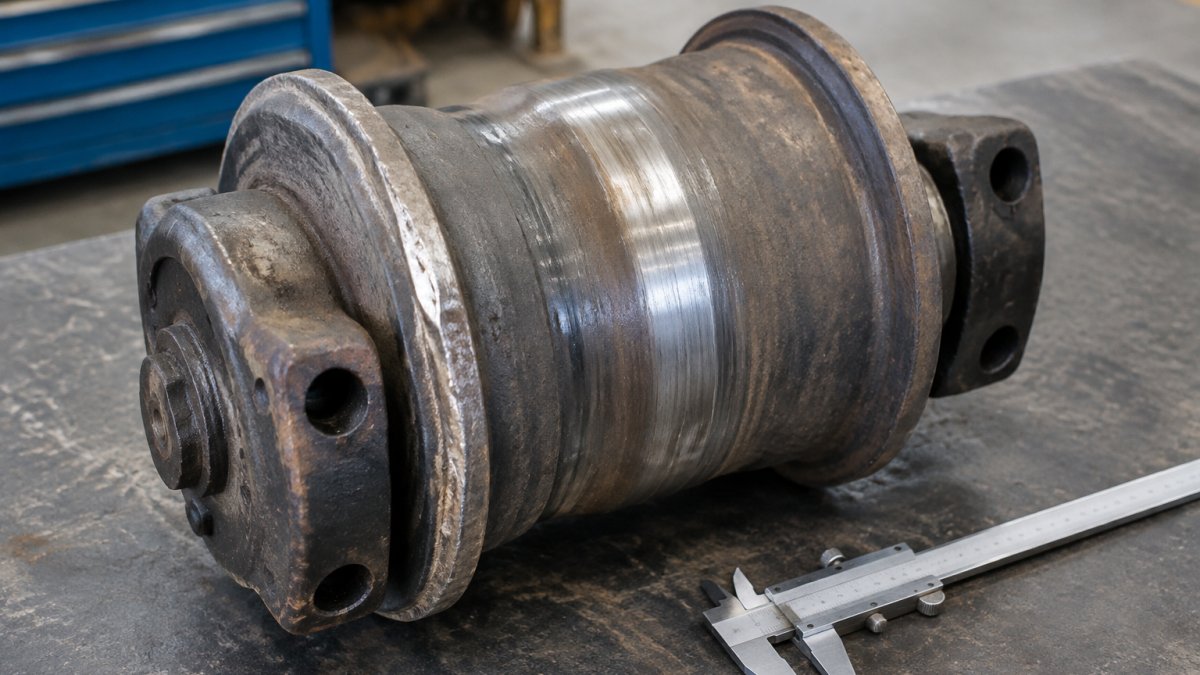
Use this matrix to match what you see to what likely caused it:
| Wear pattern | Likely cause | What to check next |
|---|---|---|
| Flange worn thin or sharp | Misalignment, loose track tension | Track tension, sprocket alignment |
| Groove cut across the tread | Chain running off-centre | Idler and sprocket wear |
| Flat spot on the surface | Seized bearing, roller stopped turning | Roller rotation, lubrication |
| Uneven wear front to back | Machine working on slopes | Operating conditions, track frame |
| Oil leak at the seal | Seal damage, contamination | Seal condition, roller body |
Flange Wear and Side Wear
Flange wear is the most telling sign of an alignment problem. The flange should have a rounded edge. When it sharpens to a knife edge, the chain has been pushing against it sideways.
Side wear on the flange usually points to:
- Track tension that's too loose
- A worn idler or sprocket pulling the chain off-line
- Operating on cambered ground that loads one side
Replace a roller with a sharpened flange before it cuts into the chain links.
Flat Spots, Grooves and Uneven Wear
A flat spot means the roller stopped rolling. Usually the bearing has seized, or the seal failed and let dirt in.
Grooves are different. A groove running across the tread means the chain is running off-centre, so the pin bosses cut a track into the roller surface. That's an alignment fault, not a roller fault.
Uneven wear front to back often comes down to operating conditions. Machines that spend their life on slopes load the front rollers harder.
Normal Wear Versus Abnormal Wear: Reading the Difference
Normal wear is even, gradual, and matches the hours on the machine. Abnormal wear is fast, uneven, or concentrated in one spot.
Ask three questions:
- Is the wear even across the tread and both flanges?
- Does the wear rate match the machine's hours and working conditions?
- Is there any pattern that points to a cause beyond age?
If the answer to any of these is no, you're looking at abnormal wear. Fix the cause, or the new rollers will wear the same way.
Your Excavator Undercarriage Inspection Checklist
A repeatable excavator undercarriage inspection checklist beats a quick look every time. Run this before each service interval.
- Clean the rollers so you can see the surface
- Check each roller turns freely by hand
- Look for oil leaks at the seals
- Inspect flange edges for sharpening
- Check the tread for grooves and flat spots
- Measure roller diameter at the wear points
- Check track tension and alignment
- Record position and condition of each roller
Position-by-position documentation matters. Number the rollers from front to back on each side. That way, when roller three fails again in six months, you know it's a pattern, not bad luck.
For related wear parts, our excavator bucket teeth replacement frequency guide covers the other end of the machine.
Measuring Roller Wear with the Right Tools
You need two tools: a vernier caliper or a roller wear gauge, and a straight edge.
Measure the tread diameter at the point of greatest wear. Compare it to the manufacturer's specification for that model.
Also measure flange thickness at its thinnest point. A flange worn below spec won't hold the chain.
Record both numbers against the position.
Watch out: measuring a dirty roller gives you a false reading. Clean the surface first, or you'll replace a roller that had plenty of life left.
Separating Roller Faults from Track Chain and Alignment Problems
Not every undercarriage symptom is a roller problem. Grinding noise, vibration, and track drifting can come from the chain, the sprocket, the idler, or the track tension. Before you order rollers, work through the fault in a fixed order so you do not replace a good part and leave the real cause in place.
A Simple Isolation Procedure
- Clean and inspect the rollers first. Check that each roller turns freely by hand and that the tread and flanges show the wear patterns described above. A roller that will not turn, or that has a flat spot, is a confirmed roller fault.
- Check track tension. A track that is too loose or too tight loads the rollers and the chain differently. Measure tension against the manufacturer's specification for the machine and adjust before drawing conclusions.
- Inspect the sprocket and idler. Worn sprocket teeth or a worn idler face pull the chain off-line, which shows up as flange wear or a groove on the roller. If the sprocket or idler is worn, the roller wear is a symptom, not the cause.
- Check the chain. Look for stretched links, seized pins, or uneven pitch. A stretched chain runs unevenly and can produce vibration that feels like a roller fault.
- Check alignment. Look for a bent track frame, worn bushings, or a machine that has been working on cambered ground. Misalignment shows up as one-sided flange wear and track drift.
Matching the Symptom to the Likely Source
- Grinding under load: check roller rotation first, then the sprocket and idler.
- Vibration at speed: check for a flat spot or a seized roller, then check the chain for stretched links.
- Track drifting to one side: check alignment and tension before blaming rollers.
- Uneven track movement: check the chain for stretched links and the sprocket for worn teeth.
- One-sided flange wear: check alignment and the idler face before replacing the roller.
If the wear pattern is on the roller but the cause is alignment or a worn sprocket, replacing rollers alone will not fix it. The new rollers will wear the same way.
Watch out: a roller that has seized can mask a chain problem. If you find a seized roller, inspect the chain links that ran over it before you put the machine back to work.
An undercarriage fault is a plant fault, and plant must be maintained in a safe condition.
Excavator Track Roller Replacement: When to Stop Inspecting and Start Ordering
Replace when the roller is past its wear limit, seized, leaking, or showing a wear pattern that points to a cause you've already fixed.
Signs it's time:
- Tread diameter below the manufacturer's limit
- Flange worn to a sharp edge
- Oil leaking from the seal
- Roller won't turn by hand
- Flat spot deep enough to feel
If you've confirmed abnormal wear, check Airman track rollers for compatible replacements. Hitachi ZX owners can view Hitachi ZX track rollers, and Kubota owners can browse Kubota track rollers.
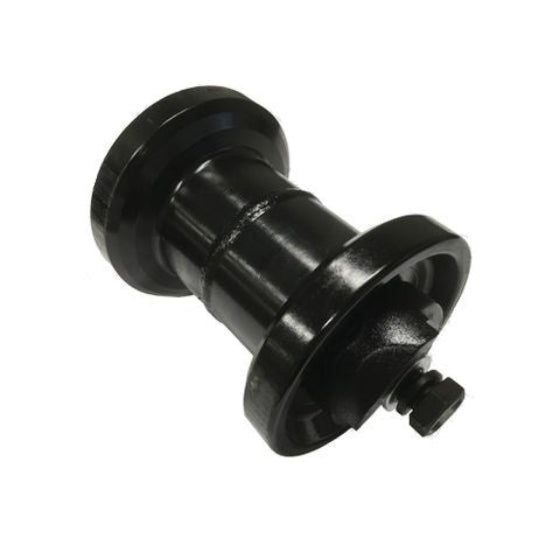
Replace rollers in sets where the wear is similar.
Match Your Replacement Rollers to Your Machine
Fitment is where most replacement jobs go wrong. Rollers are model-specific, and the wrong one won't sit right or wear right.
Before you order, confirm:
- Machine make and model
- Roller position and quantity
- Shaft diameter and mounting style
- Flange type
We've been operating since 2019, and we're Queensland's only Kato construction equipment dealer.
Undercarriage downtime is the most expensive downtime on site. If you're unsure whether a wear pattern is normal or abnormal, send us the measurements and photos.
Get started with Earthmoving Warehouse and keep your machine tracking straight. Request a price on track rollers for your machine, and our team will confirm fitment before it ships.
Frequently Asked Questions
How do you tell if an excavator track roller is worn?
Look for three things: a flange worn thin or sharp at the edge, a tread with a visible groove or flat spot, and any oil weeping around the seal. Compare the roller diameter against the manufacturer's specification using a caliper rather than judging by eye. Also listen while travelling: a grinding sound or vibration that was not there before usually points to a roller that has lost its surface or its lubrication. Any crack in the roller body or a seal that has failed means replacement, not repair.
What causes uneven wear on excavator track rollers?
Uneven wear usually traces back to misalignment or incorrect track tension. If the track is too tight, the rollers carry load they were not designed for; too loose and the chain slaps and drifts sideways, loading one edge of the flange. Working on slopes in one direction, constant turning on the same side, and running with a worn sprocket or idler all concentrate wear on particular rollers. Check alignment and tension first, because a new set of track rollers will wear the same way if the underlying cause is not corrected.
What does a leaking excavator track roller indicate?
A leak means the seal has failed and the roller has lost its lubricant. Once that happens, the internal bearings run dry, generate heat and wear quickly, which is why a weeping roller often turns into a seized or noisy one within a short period. Clean the area first so you can tell fresh oil from old buildup, then check the seal and the plug. A leaking track roller should be scheduled for replacement rather than left in service, because a seized roller can damage the track chain and the roller itself.
What should you check before ordering a replacement track roller?
Confirm the machine model and serial number, count the rollers on the undercarriage, and note whether you need a bottom roller or a top roller, since they are not interchangeable. Measure the worn roller's diameter and mounting dimensions and compare them with the manufacturer's specification. Photograph the mounting face and the wear pattern so a supplier can verify fitment before dispatch. If your machine is not listed in a catalogue, contact the supplier directly with those details rather than guessing from a photo.


