



Last Updated: November 14, 2026
Quick Summary
Replace excavator undercarriage parts when measurements show a component is past the wear limits in your machine's service manual, or when noise, visible wear or handling changes appear. Replace a single worn component, but rebuild the full undercarriage when three or more parts are past their limit.
- Wear rarely happens evenly, so fixing the first failing part slows damage to everything around it.
- Measure track sag only after releasing tension to spec, or you will pass a worn chain.
- A new chain on a worn sprocket will wear out fast, so replace both together.
- On abrasive or wet ground, shorten inspection intervals rather than relying on the hour meter.
- Get the machine model, serial number and track profile before ordering parts.
Table of Contents
- When to Replace Excavator Undercarriage Parts: The Warning Signs
- Your Excavator Undercarriage Inspection Checklist
- How to Measure Excavator Track Wear
- Excavator Track Tension Adjustment and Why It Matters
- Repair or Replace Excavator Undercarriage Parts?
- What Causes Excavator Undercarriage Parts to Wear Faster
- Sourcing Undercarriage Parts and Booking the Swap
- Frequently Asked Questions
When to Replace Excavator Undercarriage Parts: The Warning Signs
Knowing when to replace excavator undercarriage parts separates a planned repair from a costly breakdown. The difference between a planned repair and a costly breakdown is usually visible in how the machine arrives for service.
The warning signs fall into three groups:
- Noise and vibration. Grinding, squealing or a rhythmic thump that wasn't there last month.
- Visible wear. Flat spots on rollers, sharp sprocket teeth, or a chain that sits slack.
- Handling changes. The machine pulls to one side, rides rough, or struggles to climb a grade.
Any one of these is worth a look. Two or more together mean it is time to measure wear properly, not just glance at the tracks.
One insider point most guides miss: wear rarely happens evenly. A worn sprocket chews through a chain, and a loose chain hammers the rollers. Fix the first failing part and you slow the damage to everything around it.
Your Excavator Undercarriage Inspection Checklist
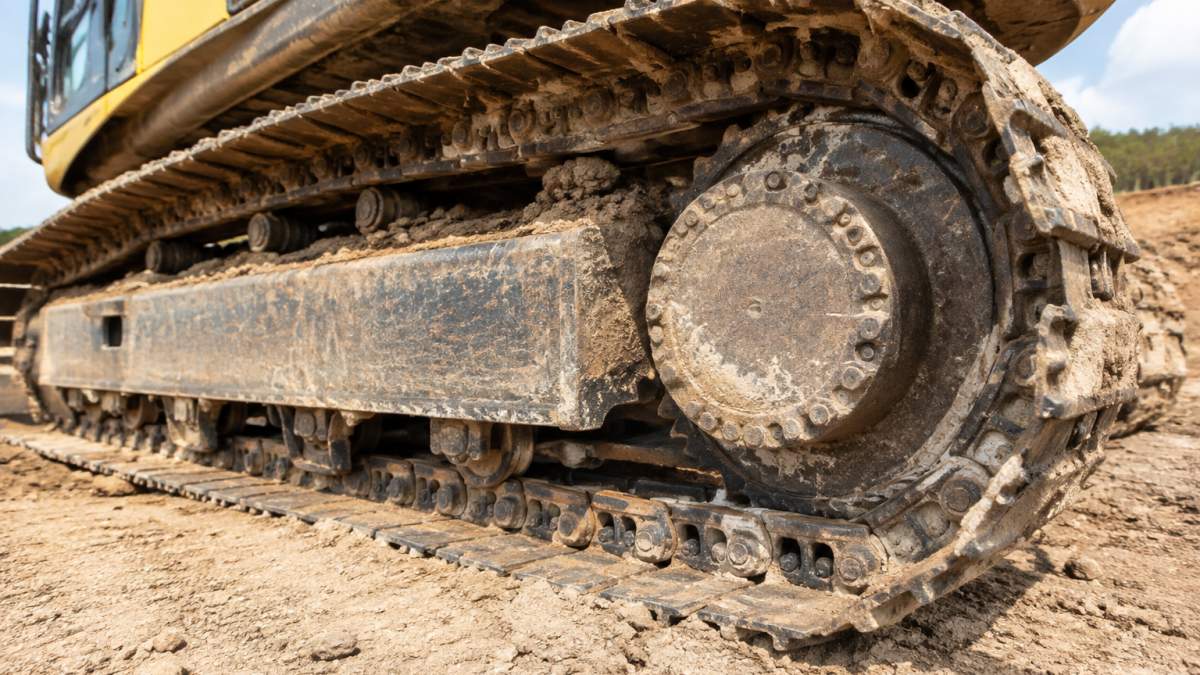
An excavator undercarriage inspection checklist turns a vague "looks worn" into a record you can compare month to month. Run it every morning before the machine goes to work, and do a full walkaround weekly.
- Track tension: check sag on the longest run of chain
- Sprockets: look for sharp, hooked or chipped teeth
- Idlers and rollers: spin by hand, listen for bearing noise
- Track shoes: check for cracked grousers and missing bolts
- Track chain: look for stretched link pitch and shiny pin wear
- Seals: check for oil weeping around rollers and idlers
- Track frame: look for cracks and packed foreign object debris
- Final drive and travel motor: listen for whine and check for leaks
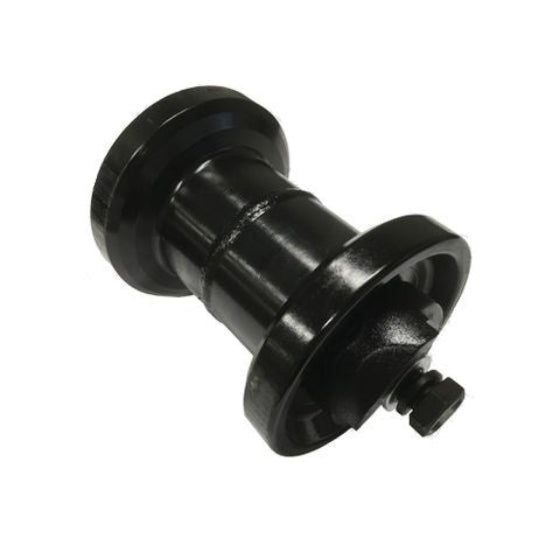
Record the findings. A daily inspection takes minutes and catches seal failure and bearing noise before they become mechanical failure. If a roller is worn past its limit, you can view replacement Airman Undercarriage Track Roller options to check fitment.
How to Measure Excavator Track Wear
Measuring wear is the only way to know when to replace excavator undercarriage parts rather than guess. You need three tools: a tape measure, a wear gauge or straight edge, and a record sheet. A set of callipers and a pin-and-bushing wear gauge turn a vague "looks worn" into a number you can compare month to month.
Follow these steps:
- Park on level ground and release track tension to the spec for your machine.
- Measure track sag on the longest span of chain between the idler and the sprocket.
- Check link pitch by measuring across several links and comparing to the new spec.
- Measure roller and idler diameter with a straight edge across the worn face.
- Check sprocket teeth for height loss and hooking.
- Compare every number to the wear limits in your machine's service manual.
The manual is the authority here. Manufacturer wear limits vary by model, so never rely on a generic figure. Wear limits vary by model, so your service manual sets the figures for your machine.
Reading the wear pattern, not just the number
A measurement tells you how much metal has gone. The wear pattern tells you why, and that changes what you replace. This is the part most guides skip.
- Even pin and bushing wear across the chain points to normal service life. Replace the chain as a set.
- Hooked or sharp sprocket teeth with a stretched chain means the sprocket is driving the wear. A new chain on that sprocket will fail early, so replace both together.
- Flat spots on rollers or idlers usually trace back to a seized bearing or a track running too tight. Fix the tension and the bearing before fitting new rollers.
- One-sided or uneven shoe wear often signals a misaligned track frame or a machine that works mostly on side slopes.
- Shiny, polished pin ends with slack links indicate the chain is running loose and slapping the sprocket.
A visual wear-limit reference you can keep in the cab
Text-heavy guides are hard to use in the field.
Watch out: measuring a chain while it is still under tension gives a falsely short reading. Always release tension to the manual's spec first, or you will pass a chain that is already past its limit.
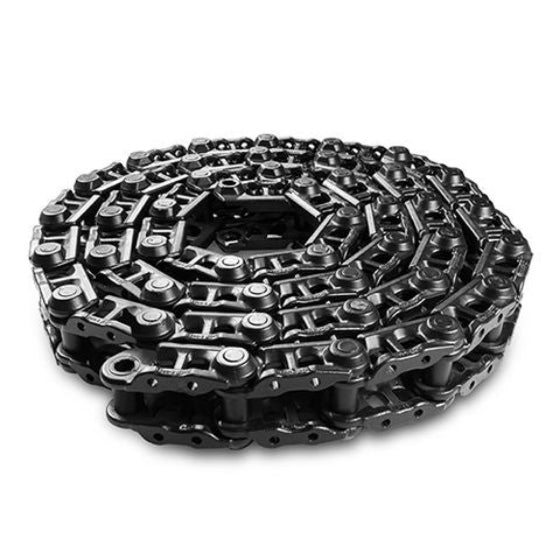
When a component is past its limit, it is time to replace it. If your chain has stretched beyond spec, you can see replacement Airman Undercarriage Track Chain options.
Excavator Track Tension Adjustment and Why It Matters
Excavator track tension adjustment is the cheapest maintenance you will ever do, and the most ignored. Too loose, and the chain slaps the rollers and jumps the sprocket. Too tight, and you load the bearings, seals and final drive until something gives.
Adjust tension to the manufacturer's spec for your machine and the ground you work on. Check it after the first few hours on a new chain, then at every daily inspection. A seized or leaking adjuster is a common cause of tension that won't hold. If yours is failing, a replacement Caterpillar Undercarriage Track Adjuster Assy may be the fix.
Repair or Replace Excavator Undercarriage Parts?
The rule of thumb: replace a single worn component, but replace the full undercarriage when several parts are worn together. A new chain on a worn sprocket will wear out fast, and you will pay twice.
Ask three questions:
- How many components are past their wear limit? One is a repair. Three or more is a rebuild.
- What is the machine's remaining life? A full track group makes sense on a machine you plan to keep working.
- What is the cost of downtime? A planned swap beats an unplanned breakdown every time.
For a machine facing a full rebuild, a complete Airman Undercarriage Track Group lets you swap the whole assembly in one go.
What Causes Excavator Undercarriage Parts to Wear Faster
Wear rates depend heavily on where and how the machine works. The environment drives wear as much as hours on the clock. Wear depends heavily on ground conditions, so the hour meter alone is a poor guide to when to replace excavator undercarriage parts.
How each ground condition attacks the undercarriage
- Abrasive ground, sand, gravel and rock dust. Fine silica particles work between the pin and bushing and act like a grinding paste. This is the fastest wear mode on pins, bushings and sprocket teeth, and it is why machines on crusher feed or quarry floors show chain stretch far earlier than the hour meter suggests.
- Mud and water. Packed mud holds moisture against seals and stops them breathing, so water enters the roller and idler bearings. The result is seal weeping, then bearing noise, then a seized roller with a flat spot. Wet ground also hides wear, because mud fills the gaps you would normally inspect.
- Hard surfaces, concrete and asphalt. Grousers cannot bite, so the track spins and scrubs. Shoe wear accelerates sharply and the extra shock loading travels up through the pins and bushings.
- Side slopes and constant turning. One side of the chain and one face of the rollers carries more load, producing the one-sided wear pattern that points to misalignment rather than normal life.
- Poor tension. A loose chain slaps the sprocket and hammers the roller faces; an over-tight chain loads the bearings, seals and final drive. Both shorten life on every component at once.
- Operator habits. Fast pivot turns and spinning tracks on hard ground shorten component life more than most operators realise.
- Missed maintenance. Skipped inspections let a weeping seal become a failed bearing and a worn sprocket become a destroyed chain.
Matching the maintenance schedule to the ground
A common pattern is to shorten the inspection interval on abrasive or wet ground and lengthen it on soft, dry soil. On shot rock or crusher feed, check track tension and pin wear weekly rather than monthly, and measure chain pitch at every service. On mud-heavy sites, check roller and idler seals at every daily inspection, because a weeping seal is the earliest warning you will get.
Watch out: a machine that moves between sites can mask a fast-wearing condition. If it spends a season on abrasive ground and then returns to soft soil, the wear clock does not reset, record the ground type against each inspection so you can see which conditions are driving the numbers.
Match your maintenance schedule to the conditions, not just the hour meter. A machine on abrasive ground needs closer attention than one on soft soil.
Sourcing Undercarriage Parts and Booking the Swap
Sourcing the right parts comes down to fitment and availability. Get the machine model, serial number and track profile before you order, and confirm the part suits your setup.
A simple decision guide:
| Situation | Best approach | Why |
|---|---|---|
| One worn component | Replace that part only | Saves cost, fixes the fault |
| Several parts worn | Rebuild the undercarriage | Avoids repeat labour |
| Machine working daily | Keep a spare on hand | Cuts downtime |
| Unsure of fitment | Confirm with the supplier | Avoids returns |
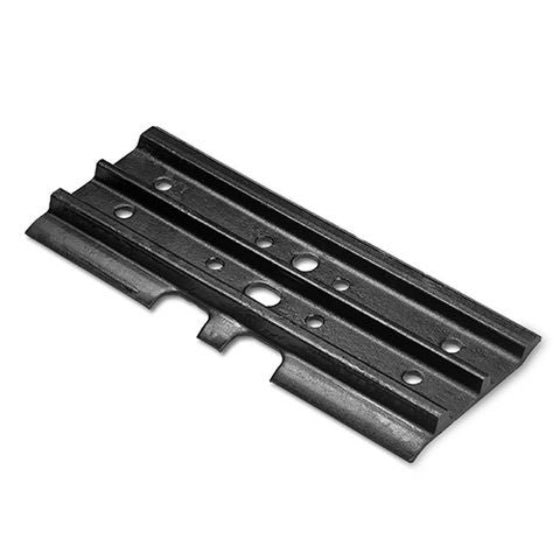
Our team can help verify fitment before you order. If you are ready to source, check Airman Undercarriage Track Shoes for fitment and availability. DIY installation is possible for experienced hands, but a full undercarriage swap is heavy work and often best left to a professional.
Undercarriage wear will not fix itself, and a breakdown on site costs far more than a planned repair. At Earthmoving Warehouse, we help you get the right parts the first time. We stock undercarriage spare parts for Airman mini excavators, offer expert advice to verify fitment, and ship nationwide so your machine spends less time idle.
Frequently Asked Questions
How do you know when excavator undercarriage parts need replacing?
The clearest signals are a track chain that has stretched past its wear limit, sprocket teeth worn to a sharp point, and flat spots or deep grooves on rollers and idlers. Add leaking seals, bearing noise and vibration through the track frame and the undercarriage is telling you it is due. Measure rather than guess: check pin and bushing wear, sprocket profile and roller diameter against the limits in your machine's service manual, then replace any component that has passed them.
How often should you inspect an excavator undercarriage?
Walk around the machine daily, checking for foreign object debris, leaks and obvious damage before you start. Do a full undercarriage inspection weekly or every 250 operating hours, whichever comes first, measuring track sag, checking track tension and looking for uneven grouser wear. Machines on abrasive ground, or running long shifts in demolition debris, should be checked more often. Record each inspection so you can spot a component wearing faster than the rest of the set.
Can excavator undercarriage parts be repaired instead of replaced?
Sometimes. Repair makes sense when one component is worn and the rest of the set has plenty of life left. Once the track chain, sprockets, idlers and rollers are all near their limits, replacing them as a set is the cheaper path, because new parts running against worn ones simply wear each other out faster.
How does track tension affect undercarriage wear?
Too tight and you load the pin and bushing joints, the sprocket and the final drive, which shortens component longevity and can lead to seal failure. Too loose and the chain slaps the track frame, jumps the sprocket and wears the roller flanges. Check track sag on level ground, adjust to the specification for your machine, and recheck after the first few hours on new chains while they bed in. Correct excavator track tension adjustment is one of the cheapest wear controls you have.


