



Table of Contents
- Durable Rock Breaker Parts for Sale: What to Look For
- Quick Comparison: Essential Rock Breaker Spare Parts
- Heavy Duty Rock Breaker Chisel Types and When to Use Them
- Signs of Rock Breaker Wear and Tear: When to Replace Parts
- Hydraulic Rock Breaker Maintenance Tips for Maximum Lifespan
- Genuine vs Aftermarket Components: A Cost-Benefit Analysis
- Step-by-Step Guide to Replacing Rock Breaker Wear Parts
- Conclusion: Where to Buy Durable Rock Breaker Parts
- Frequently Asked Questions
Last Updated: September 9, 2026
When your excavator sits idle because a rock breaker part has failed, every hour costs you money. Sourcing durable rock breaker parts for sale isn't just about finding the cheapest option; it's about protecting your equipment uptime and avoiding the frustration of components that wear out after a few weeks of work. At Earthmoving Warehouse, we've supplied rugged attachments and spare parts to Australian contractors since 2019.

The market is full of suppliers, but the real challenge is finding components that match your machine's tonnage and the demands of your site. Below, we'll walk you through what to inspect before you buy, the specific wear parts that fail most often, and how to maintain them for maximum lifespan. Below, we'll walk you through what to inspect before you buy, the specific wear parts that fail most often, and how to maintain them for maximum lifespan.
Durable Rock Breaker Parts for Sale: What to Look For
A durable rock breaker part is one that resists wear, handles extreme pressure, and maintains its structural integrity under continuous impact. When you're evaluating options, the material quality and precision engineering matter more than the initial price tag. Look for components made from high-tensile steel with proper heat treatment, as these resist the abrasion that comes with breaking rock and reinforced concrete.

Tonnage compatibility is the first thing to verify. A chisel or bushing designed for a 2-tonne mini excavator will fail quickly on a 5-tonne machine because the impact energy and hydraulic pressure are mismatched. Always confirm the part suits your specific breaker model and carrier weight class before purchasing.
Quick Comparison: Essential Rock Breaker Spare Parts
Understanding which parts wear out and why helps you budget and plan maintenance. Here's a snapshot of the most common components you'll need to replace over a breaker's life:
| Part | Function | Common Wear Indicator | Typical Lifespan |
|---|---|---|---|
| Chisel / Moil Point | Transfers impact energy to the rock | Mushrooming, blunting, cracking | Varies with material |
| Bushings | Guide the chisel and absorb side loads | Ovaling, excessive play | 200-500 hours |
| Seal Kit | Keeps hydraulic pressure contained | Oil leaks, loss of power | 500-1,000 hours |
| Diaphragm | Separates nitrogen from hydraulic oil | Breaker slows or stops | Check at service |
| Wear Plates | Protect the breaker housing | Grooves, thinning metal | Inspect regularly |
Each of these components plays a specific role in the breaker's operation. The chisel and bushings are the primary wear items, while seals and diaphragms protect the internal hydraulic system from contamination and pressure loss.

Heavy Duty Rock Breaker Chisel Types and When to Use Them
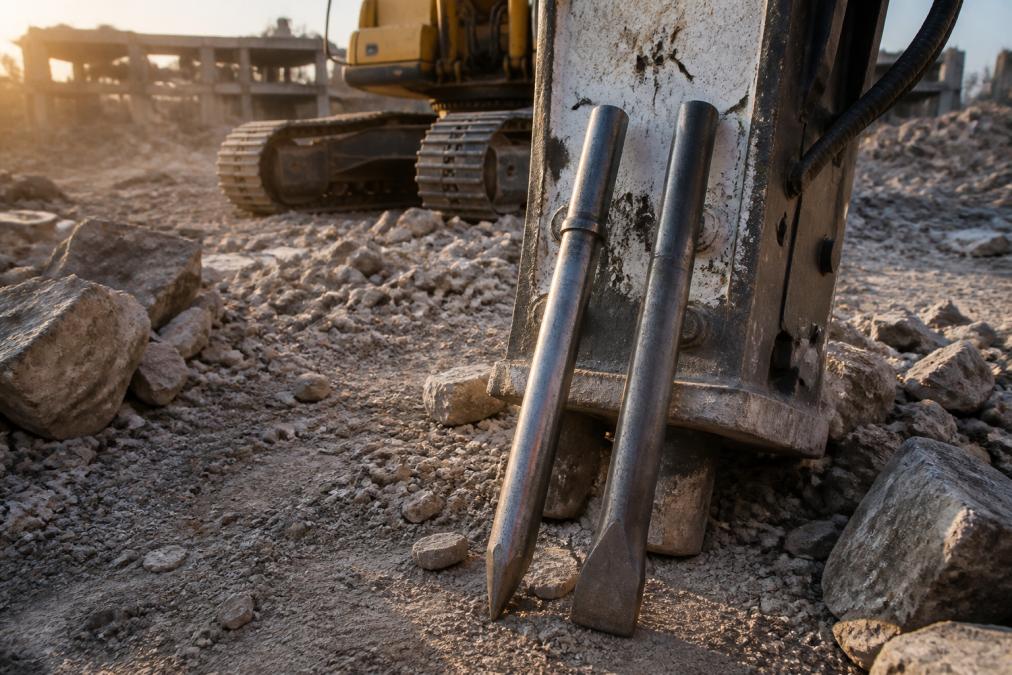
Choosing the right chisel type directly affects your rock breaking efficiency. The three most common profiles are the moil point, the chisel or wedge, and the blunt tool. Each is designed for a specific application, and using the wrong one slows production and accelerates wear.
A moil point is the best all-rounder for general demolition, trenching, and breaking through concrete and softer rock. Its tapered tip concentrates force for penetration. A wedge or chisel tool is better suited for breaking flat surfaces, splitting rock layers, and working in confined trenches where you need a wider breaking edge. A blunt tool is reserved for secondary breaking of oversized boulders and very hard rock where impact force matters more than penetration.
Signs of Rock Breaker Wear and Tear: When to Replace Parts
Recognising the early signs of rock breaker wear and tear saves you from catastrophic failure on site. The most obvious indicator is a visible change in the chisel: if the tip has mushroomed, become blunt, or developed cracks, it's time to replace it. Running a worn chisel reduces impact energy and puts extra stress on the bushings and internal components.
Listen to your breaker and watch its performance. A drop in breaking power, slower cycle times, or unusual vibration often points to internal wear. Oil leaks around the seals or a breaker that fires inconsistently are clear signals that the seal kit or diaphragm needs attention. Grease your breaker regularly and inspect the bushings for ovaling or excessive play between the bushing and the chisel.
Hydraulic Rock Breaker Maintenance Tips for Maximum Lifespan
The single most important maintenance task for any hydraulic rock breaker is lubrication. Greasing the chisel and wear bushings every hour of operation prevents metal-on-metal contact, which is the primary cause of premature wear. Use a high-quality chisel paste designed for extreme pressure and temperature, not general-purpose grease.
A common approach to maintenance is to follow a set schedule: inspect the chisel and bushings daily, check nitrogen pressure levels weekly, and service the seals according to the manufacturer's recommendations. Always use the correct hydraulic pressure and oil flow for your breaker model, as over-pressurising the system causes internal damage. For a complete unit, the Earthquake RB20S Rock Breaker for 1.7-2.7T excavators includes a nitrogen recharge kit and premium grease. You can view the full package and request a price for the RB20S and other models through our product listings.
Genuine vs Aftermarket Components: A Cost-Benefit Analysis
The decision between genuine and aftermarket components comes down to balancing upfront cost against long-term reliability. Genuine parts are precision-engineered to the manufacturer's exact specifications, guaranteeing a perfect fit and consistent performance. Aftermarket parts can offer significant savings, but quality varies widely between suppliers.
A cost-benefit analysis of aftermarket parts shows that cheap, low-quality components are usually a false economy. They may fit, but if the steel quality is inferior, they wear out faster and can damage the breaker itself. However, reputable aftermarket suppliers who use high-grade materials and match original specifications can offer excellent value without compromising on durability.
Step-by-Step Guide to Replacing Rock Breaker Wear Parts
Replacing a chisel is a straightforward job if you follow the correct procedure. First, ensure the breaker is fully supported and the hydraulic pressure is released. Remove the retaining pins and any shims or washers that hold the chisel in place. You may need a suitable tool to drive the old chisel out of the bushing.
Before installing the new chisel, inspect the bushings for wear. If they show significant ovaling, replace them at the same time, as a worn bushing will quickly damage a new chisel. Apply a generous coat of rock breaker grease to the shank of the new chisel before sliding it into the breaker. Reinstall the retaining pins, shims, and washers, then cycle the breaker a few times to seat the chisel properly.
Conclusion: Where to Buy Durable Rock Breaker Parts
Finding durable rock breaker parts for sale requires a supplier who understands the demands of Australian job sites. The cost of downtime is too high to risk cheap components that fail under pressure.
At Earthmoving Warehouse, we stock a comprehensive range of rock breakers and spare parts, from chisels like the one suited to the EPIROC SB102 to our premium Earthquake rock breaker grease. As Queensland's only Kato construction equipment dealer, we combine technical expertise with a network of pickup locations across SE QLD, NSW, and Victoria, ensuring you get the right part quickly. Request a price today and keep your excavator working, not waiting.
Frequently Asked Questions
What is the typical lifespan of a hydraulic rock breaker?
With proper maintenance and regular greasing, a hydraulic rock breaker can last 5,000 to 10,000 operating hours. The case and hitch often outlast the internal power cell. Wear parts like chisels, bushings, and seals need replacement more frequently, typically every 500 to 1,500 hours depending on the abrasiveness of the material you are breaking.
How do I identify high-quality rock breaker replacement parts?
Look for parts made from high-tensile steel with proper heat treatment for wear resistance. Check that the chisel diameter and length match your breaker's specifications exactly. Quality seals and bushings should come from reputable suppliers who can verify compatibility with your specific breaker model, not just generic parts that may require modification.
Are aftermarket rock breaker parts as reliable as OEM?
Quality aftermarket parts can match or exceed OEM reliability when manufactured to the same specifications. The key is sourcing from a supplier who understands tonnage compatibility and uses appropriate materials.
What are the most common rock breaker parts that require replacement?
The chisel or moil point wears fastest and needs the most frequent replacement. Other common wear items include bushings, wear plates, and the diaphragm. Seal kits and piston components may need attention over time. Regular inspection of these parts helps you schedule replacements before a failure causes costly downtime on site.


